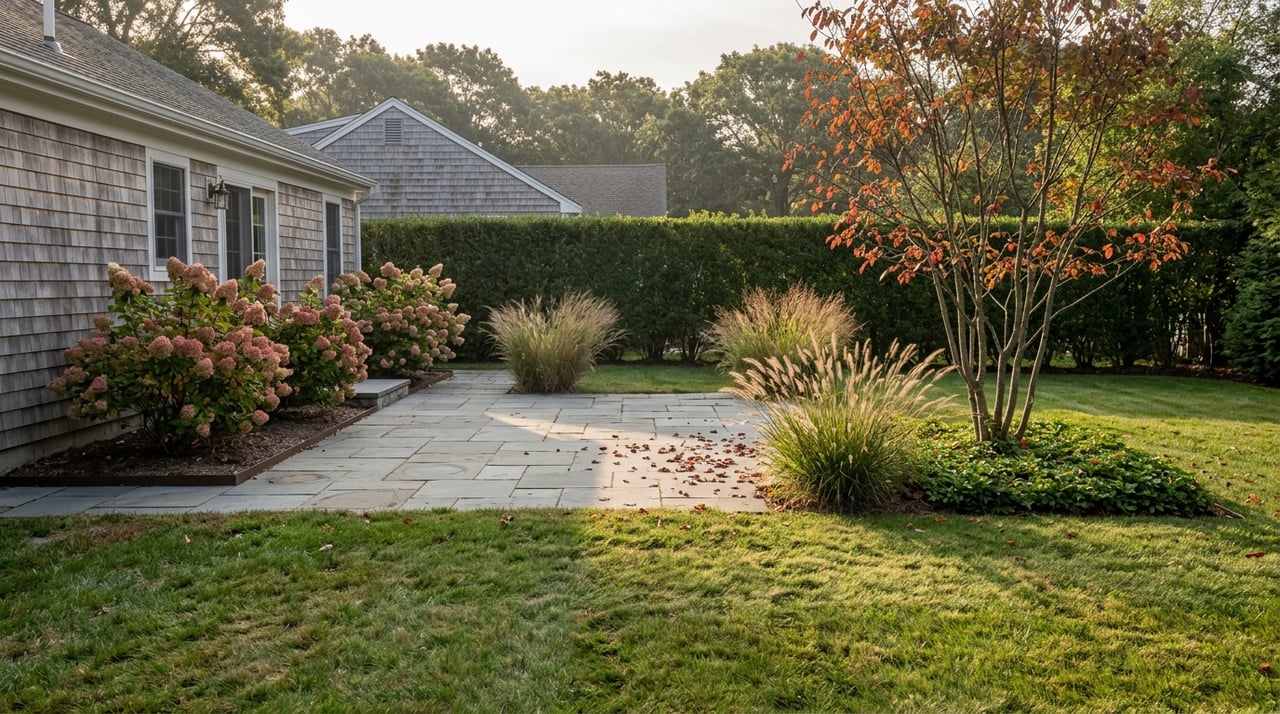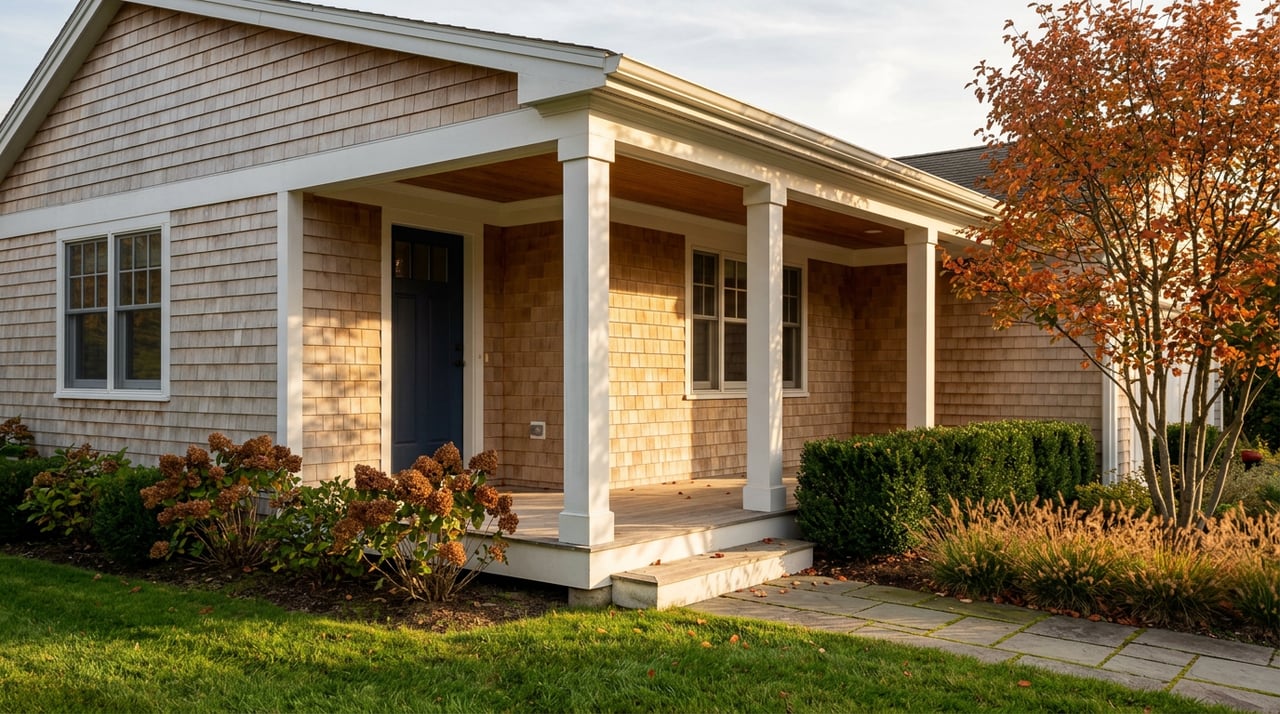
Walk the dirt roads through the East Street Bogs right now and the berries are just starting to blush, that deep red creeping in at the edges before the whole field turns. Check your phone at the same trailhead and you will likely see an ad for tickets to an oyster and art festival happening twelve days from now, at a museum less than two miles away. Most years, these are two separate stories that Duxbury residents follow on two separate tracks: the bog calendar, which belongs to whoever leases the land and moves at the pace of weather, and the oyster calendar, which belongs to a shellfish company that has spent the summer setting up shop on a museum lawn. This year those tracks land in the same window, and that overlap is worth knowing about before it passes.
Two harvests, one town, different clocks
The Duxbury Bogs, also called the East Street Bogs or the Loring Bogs, sit on 198 acres the town bought in 1971 specifically to keep the land in cranberry production rather than let it turn into something else. The property traces back to 1927, when F.M. Leonard's Clearbrook Cranberry Company first developed it, and it changed hands again in 1930 under Edgar W. Loring, who expanded the bog and its reservoir. Roughly 40 of those acres are still an active, working bog today, threaded by a 4.5-mile trail network that includes a stretch of the regional Bay Circuit Trail running from East Street to Mayflower Street.
Statewide, cranberry harvest runs from mid-September through early November, with most of the activity concentrated in October, according to the Massachusetts Cranberries growers' association. That means the bogs are entering their working season right now, and the trail network that residents use for dog walks and stroller loops the rest of the year becomes, at least in patches, an active job site. The Duxbury Bogs page maintained by the North and South Rivers Watershed Association is direct about this: the trails are occasionally closed to allow room for cranberry harvesting and cultivation. It is public land, but not unconditionally public land, and the condition kicks in exactly now.
That is one clock. The other belongs to Duxbury Oyster Company.
The festival that did not exist a year ago
For most of the summer, Duxbury Oyster Company has held a standing Thursday residency at the Art Complex Museum, serving its Prince Caspian oysters alongside the museum's rotating gallery shows and artist talks. That residency was a warm-up. On Saturday, September 26, from noon to five, the museum and the oyster company are running Shuckfest, a first-of-its-kind festival pairing local shellfish with local art, plus live music, craft beer, and wine. It is being billed as the only oyster festival based in Duxbury itself, as distinct from the raw bar tastings and seafood nights scattered across the South Shore.
The Art Complex Museum sits at 189 Alden Street and keeps free admission year-round, open Wednesday through Sunday from noon to five, with extended Thursday hours until eight. Tickets for Shuckfest itself are sold separately through Eventbrite, since the food, beer, and wine are not part of the museum's standard free-admission model.
Here is where the calendars actually touch. Shuckfest lands on September 26, which is inside the same two-to-three week stretch when the bogs down the road are ramping toward their own harvest closures. A resident who only follows the museum's events page will show up for the oysters and never notice the bogs are mid-harvest. A resident who only walks the bog trails will watch the berries turn and never hear that the town's newest food festival is happening less than a fifteen-minute drive away, on the same general calendar. Neither group is wrong. They are just each holding half the picture.
| What | When | Where |
|---|---|---|
| Cranberry harvest window (statewide) | Mid-September through early November, peak in October | Duxbury Bogs, East Street |
| Trail access at Duxbury Bogs | Occasionally restricted during active harvest | 4.5-mile network, Bay Circuit Trail segment included |
| Shuckfest | Saturday, September 26, noon to 5 p.m. | Art Complex Museum, 189 Alden St |
| Museum standard hours | Wed–Sun 12–5, Thu until 8 | Art Complex Museum |
Why the overlap matters more than either event alone
Neither of these facts is a secret on its own. What makes the window worth marking on a calendar is that Duxbury does not usually hand residents a single, contained stretch where both halves of its harvest identity, the working farmland and the food scene built on top of it, are visible in the same trip out the door. Most years you catch one or the other, weeks apart, and the connection between them stays theoretical.
This year it is not theoretical. If you plan a Saturday around Shuckfest, you can reasonably build a loop that includes an early walk at the bogs before the trails see heavier harvest traffic, then a midday shift to the museum lawn for oysters and live music. That is not a stretch of imagination. It is two entries on the same two-week calendar, both grounded in the same agricultural season, treated by most residents as unrelated because they show up in different feeds.
The bogs and the festival are not competing for your Saturday. They are the same season, told from two different addresses.
What the restaurants already figured out
The town's restaurant scene has been quietly building around this same overlap for longer than the festival has existed. The Winsor House, which operates as Island Creek's food and hospitality flagship, describes itself as the off-hours gathering spot for staff, growers, and Duxbury locals, the kind of place where the people who actually work the water end up after their shifts. The Oysterman, with its Duxbury location on Railroad Avenue, built its name on the same raw bar tradition. Both existed before Shuckfest was ever a line item on a calendar, which is part of why the festival makes sense as a Duxbury event specifically, rather than a concept that could have landed in any South Shore town with a coastline.
None of this requires a reservation strategy or an itinerary printed in advance. It requires knowing that the next two weeks are the one stretch of the year when the bog's harvest and the town's newest festival are both live at the same time, instead of trading off in sequence the way they usually do.
The takeaway for anyone already living here
If you have lived in Duxbury through a few autumns, you already have a personal ritual around one half of this, either the bog walk or the oyster scene, and you have probably never thought to connect it to the other. That is the actual finding here: not that Duxbury has a good fall, which every South Shore town claims, but that this particular fall has an unusual amount of overlap packed into a short window, and the overlap is easy to miss precisely because the bogs and the festival circuit have always been tracked by different people for different reasons.
The next two weeks are the ones to use. After that, the bogs move deeper into active harvest, trail access gets less predictable, and Shuckfest becomes something you read about after the fact rather than something on your actual calendar.
Whether you are settled here for good or just starting to pay closer attention to what makes this town different from its neighbors, that kind of local rhythm, the kind that only shows up if you are watching both halves of the season instead of one, is exactly what makes Duxbury worth knowing well. If a home search or a sale is somewhere on your horizon and you want a South Shore specialist who tracks this town at that level of detail, reach out to Lindsay Conlon to talk through what is next.